
When I was learning Japanese at university, my sensei taught us that handwriting was very important in Japan. If you had messy handwriting, she said, people would assume that you would have similar lack of care in other areas of life and that you might not be the sort of person they'd want to date or hire. It's not like in English where if you write illegibly, people may just assume you're a doctor.

Every character has a proper stroke order, however, and following that exactly helps with making your handwriting neater and my sensei insisted that Japanese people could absolutely tell if you'd used the wrong stroke order, even if it otherwise looked correct to you.
Really, neat handwriting does make communication easier. It meant my professor could read my writing and properly mark my exams. It meant being able to read Japanese more easily once I moved there. If the entire point of writing is communication, then prizing neatness makes sense. Except in calligraphy, where I can't read much of the cursive - but that's more an art form anyway.
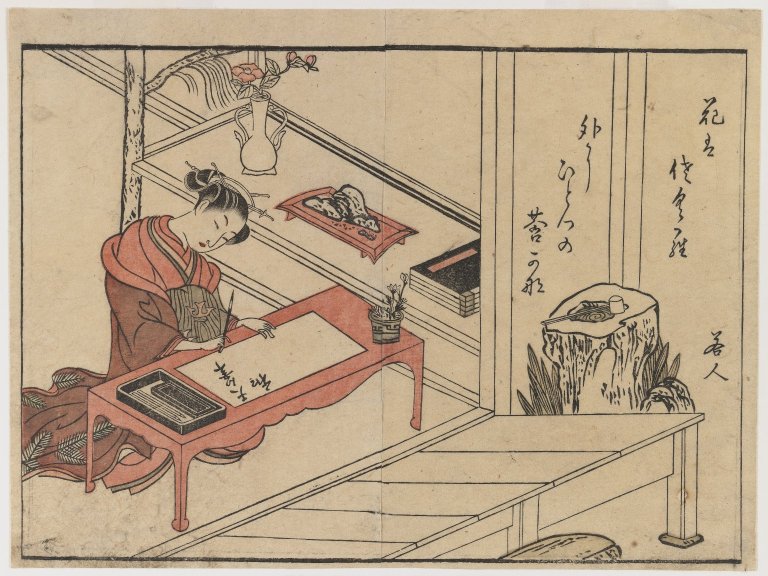
Calligraphy is beautiful, and in the future may actually be the only time people actually write out kanji anymore. Thanks to modern technology, many Japanese people don't have as much need to write kanji, instead reading, texting, and typing it.
Forgetting the kanji isn't something that happens only to foreigners. If you think about it, when was the last time you actually wrote anything in English? It's just not something people spend as much time doing because they can just e-mail or text it instead.
This does make learning Japanese a lot easier for foreigners. Learning to recognise and read kanji takes a lot less time than learning them well enough to write them from memory, so you can become functionally literate in Japanese much more quickly. When you type in Japanese, so long as you know the reading of the word, your phone or computer will provide you with a list of kanji to choose from - you only have to be able to recognise them.
Many Japanese learners can cut out writing kanji from their studies altogether and can get on in Japan just fine most of the time. Thanks to the prevalence of texting, even if you're living in Japan, it can be considered more advanced study rather than an immediate need. Although if you are living in Japan, you may find that there is some need for being able to write in Japanese, such as addressing envelopes at the post office.


